2026 Studies on Infinity #4
2025 Caravaggio
2025 Close by, so far – Landscapes of Infinity
2024 Nudity and Landscape
2024 Handarbeit
2023 The Shift of Focus
2022 The Shift of Focus / Installation
2021 Harvest
2019 Reflection
2018 INSIDE OUT
2016 Pieces & Elements
2014 Collective Jumps
2014 Der Bau – Gruppe
2013 HEUTE: volkstanzen
2013 Hinter den Gärten
2013 Experience #0.3
2012 Experience #1
Studies on Infinity #4 – Drumming and Rescue Score
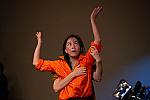
Premiered at the Tanzhalle Sommerfest.ival 2026
“Congrats to Isabelle Schad, the dancers and Anders Vestergaard for their fantastic new piece. Mindblowing.”
Chris Pitsiokos
.
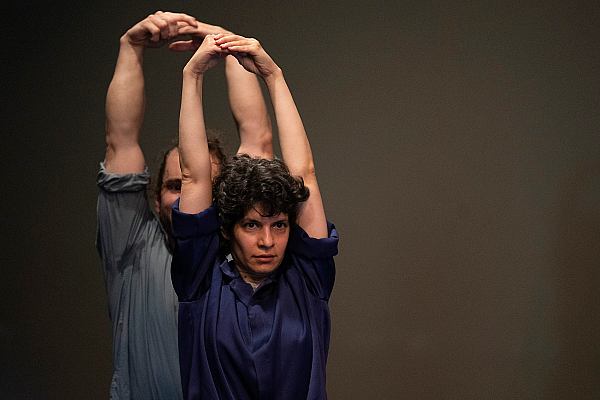
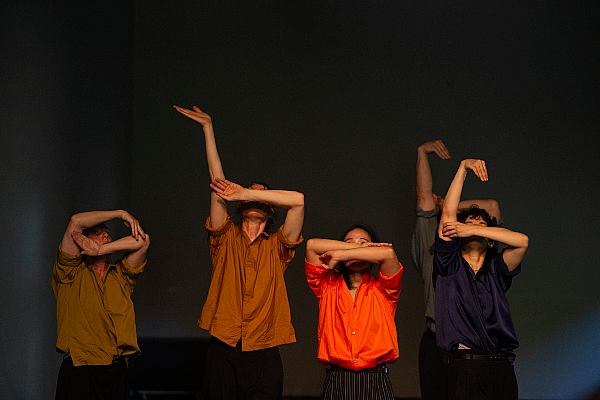
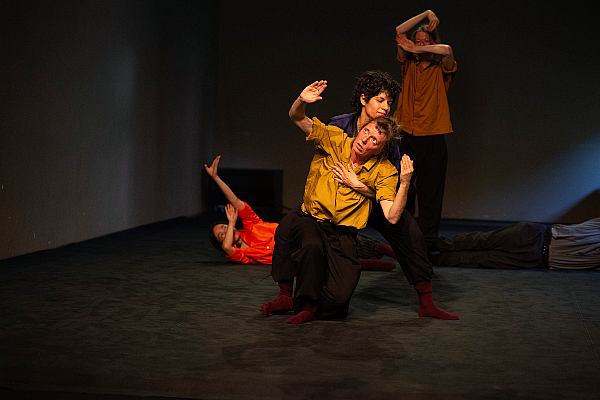
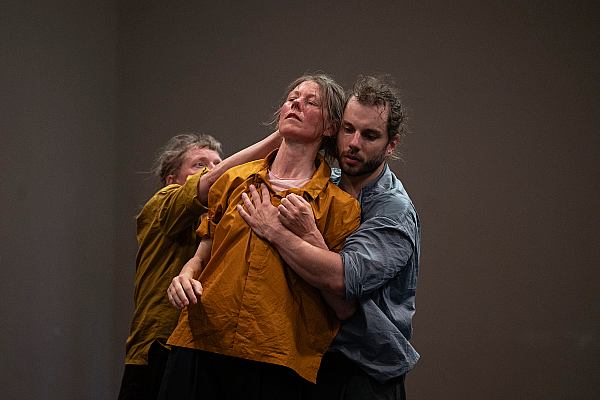
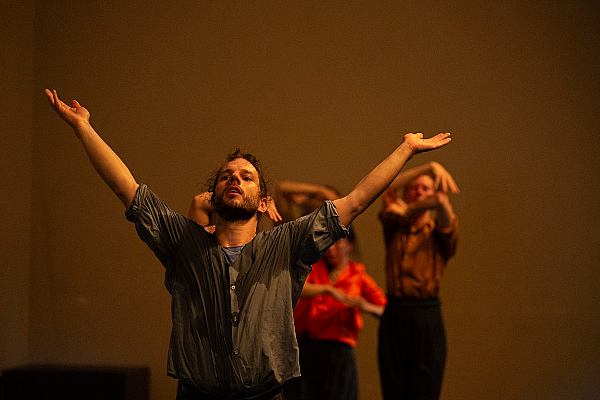
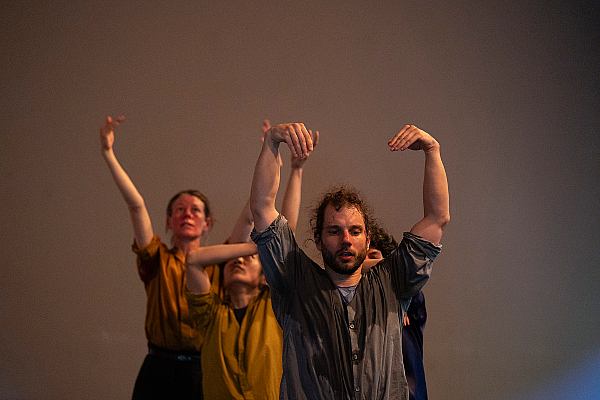
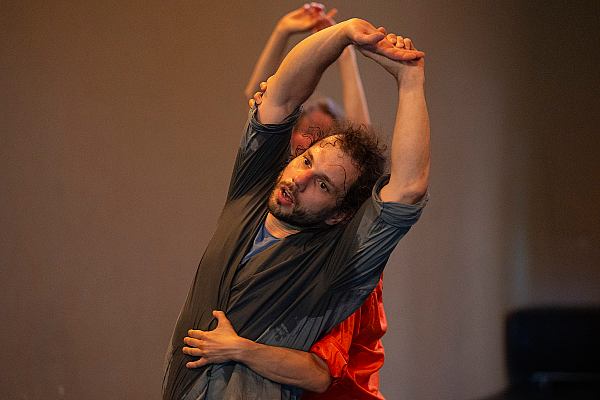
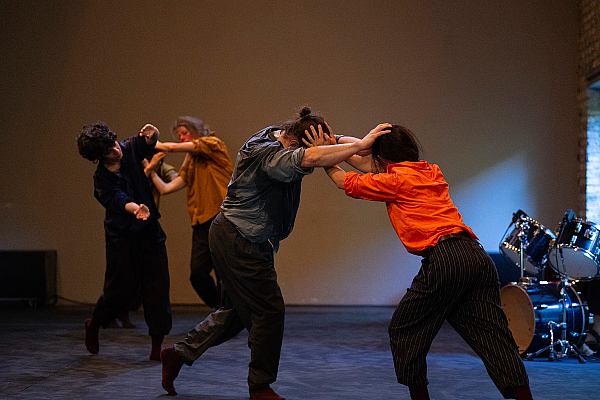
With Studies on Infinity #4, Isabelle Schad continues her long-standing research on movement materials and their potential to unfold in infinite variations and interconnections. This time, the work centers on the question of how, through and with our respective media—dance, sound, voice, and music—we can create spaces for resilience, hope, and collective experience, especially in times of social and global crisis.
The starting point is a movement practice developed over many years, combining somatic techniques with principles of Aikido and the spirit of Zen, and continuously refined in collaboration with the members of the Mobile Ensemble.
The collaboration with musician and composer Anders Vestergaard expands the choreography through a powerful percussive dimension, intensifying the bodily and musical resonances, forces, and relationships within the performance. The resulting material will be presented for the first time in an intimate and open setting composed of miniatures and loops.
…
CAST & CREDITS
Concept & Choreography: Isabelle Schad / Co-choreography & Dance: Aya Toraiwa, Jan Lorys, Forough Fami, Claudia Tomasi, Isabelle Schad, Yen Lee / Composition, Live-Performance, Drums: Anders Vestergaard/ Costume: Michael Sontag / Light Design: Bruno Pocheron / Voice Coaching: Ignacio Jarquin / PR, Outreach: Elena Basteri / Production Management: Heiko Schramm
Production: Isabelle Schad
Funded by: Senate Department for Culture and Social Cohesion of the State of Berlin / Supported by Wiesen55 e.V.
Production: Isabelle Schad | Funded by: Senate Department for Culture and Social Cohesion of the State of Berlin | Supported by Wiesen55 e.V.
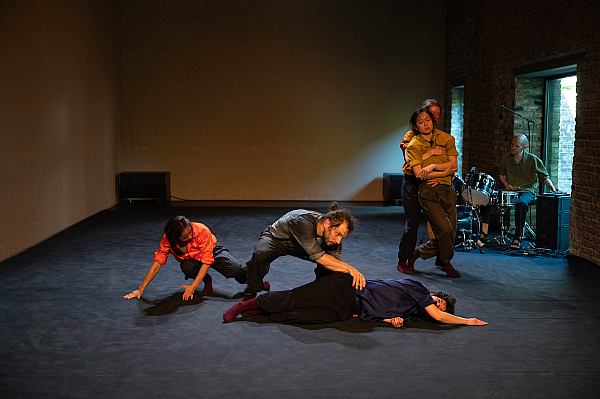
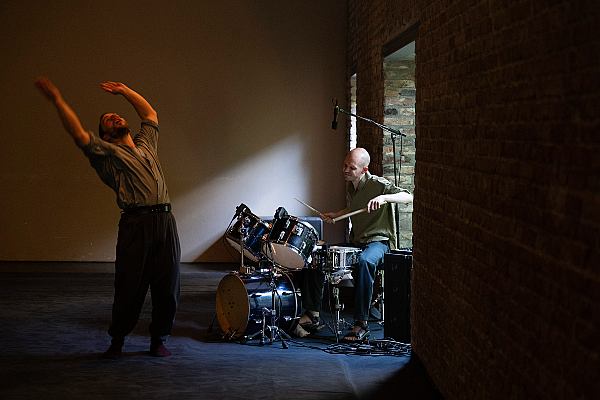
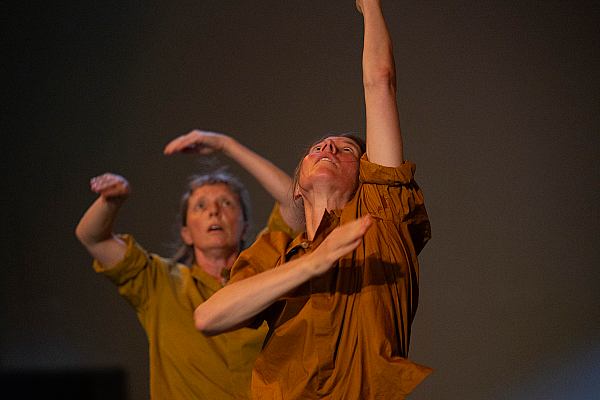
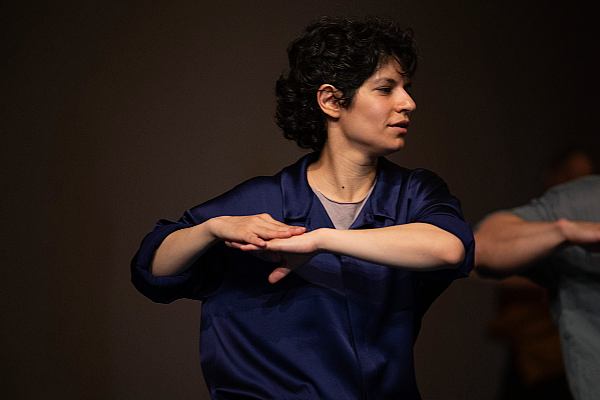
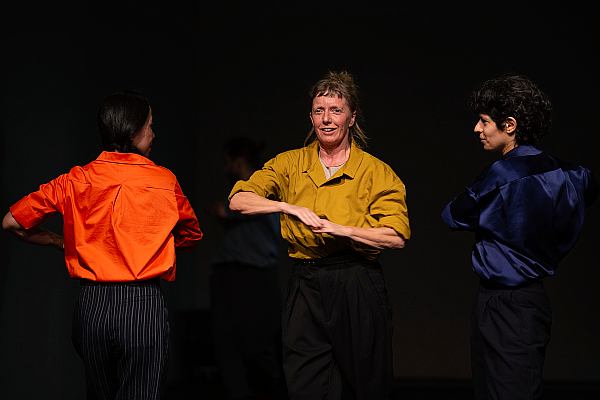
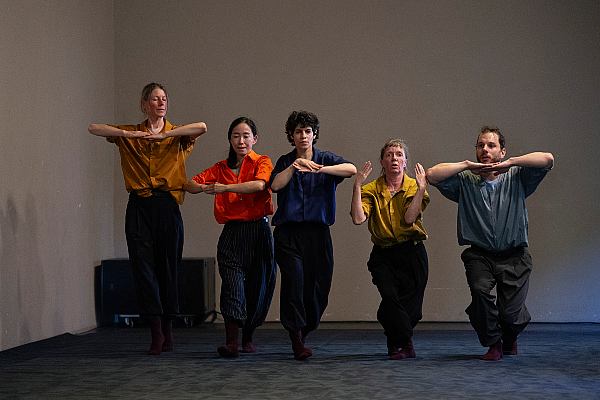
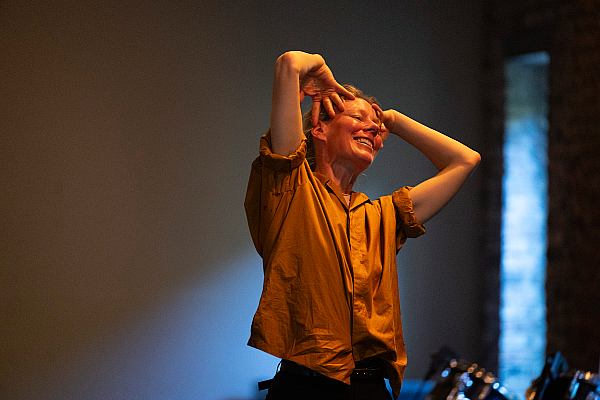
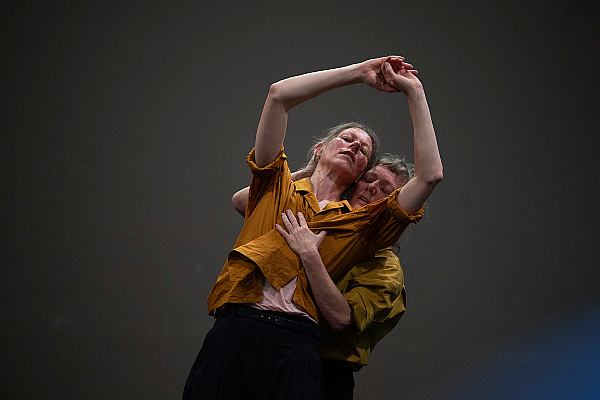
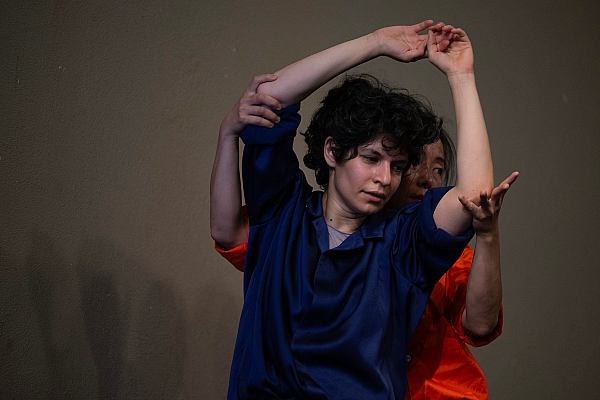
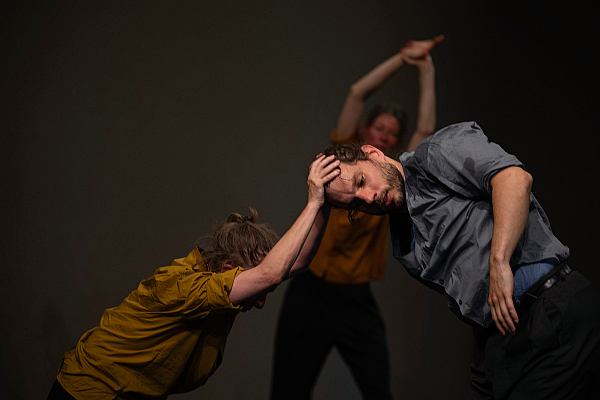
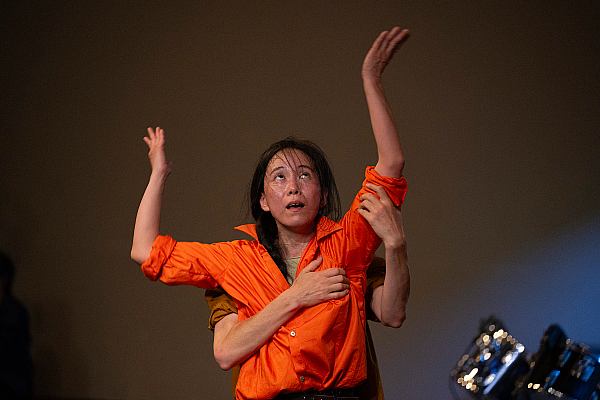
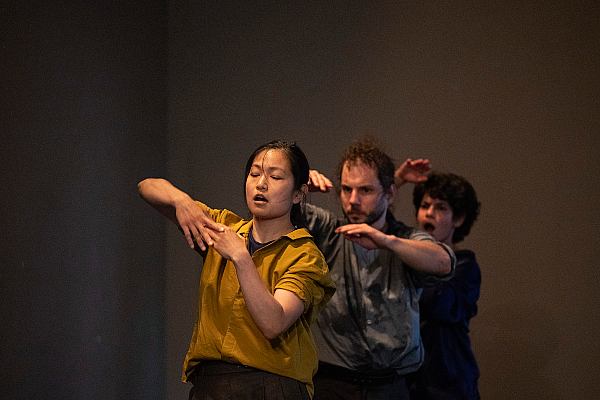
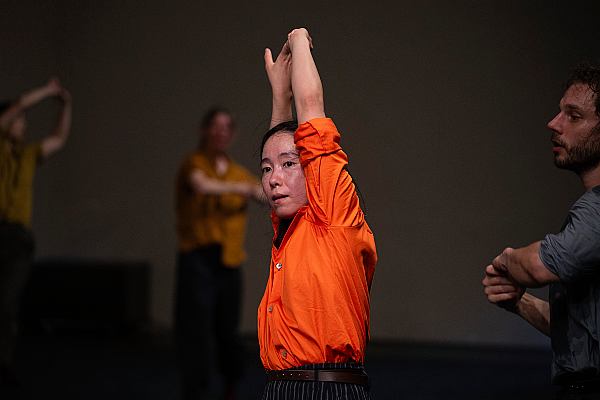
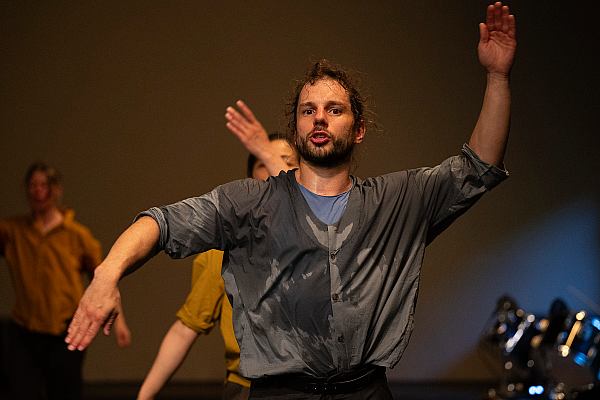
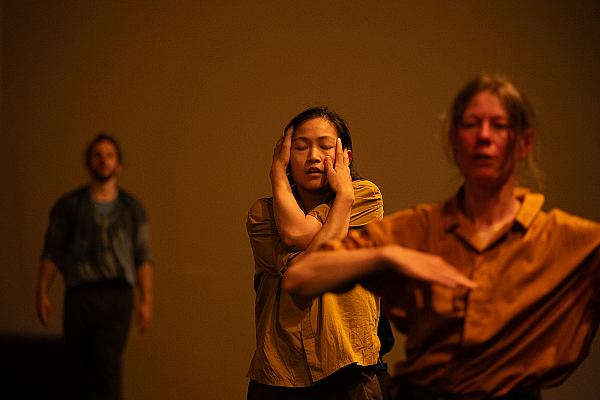
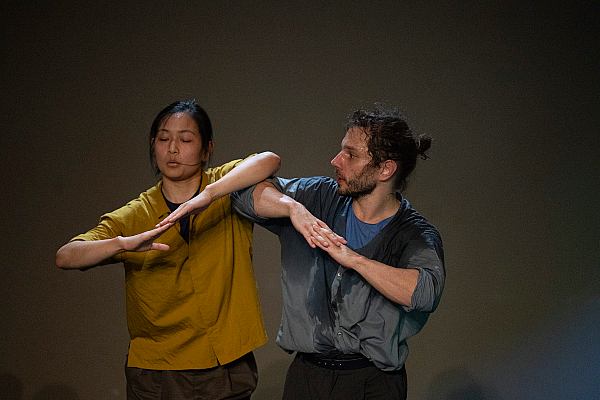
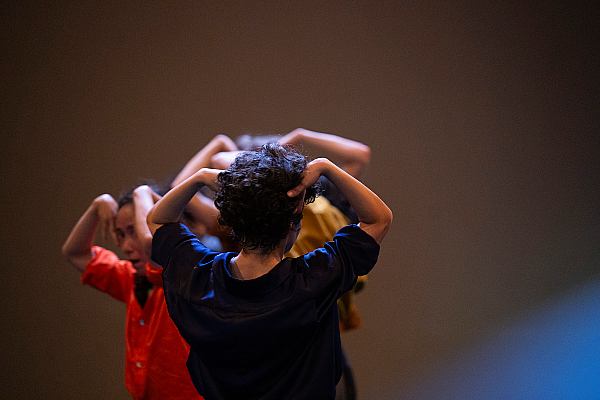
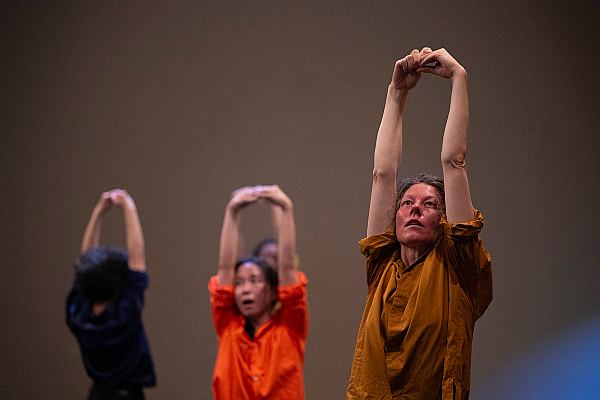
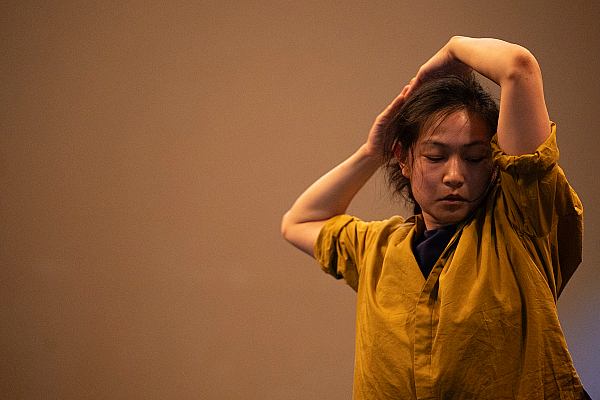
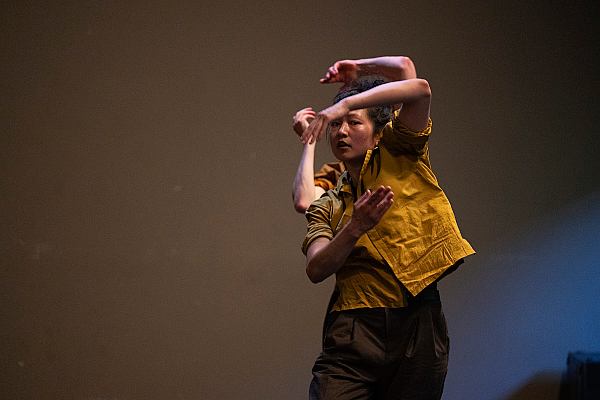
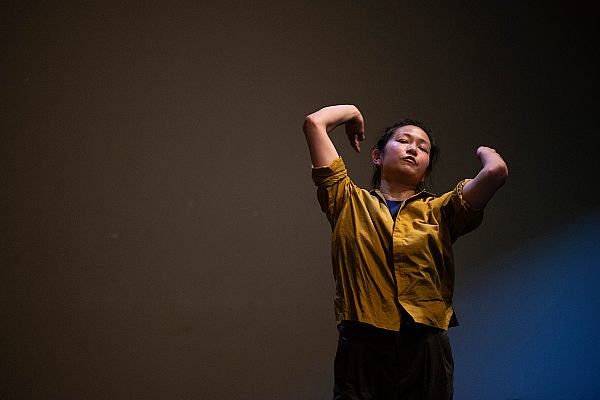
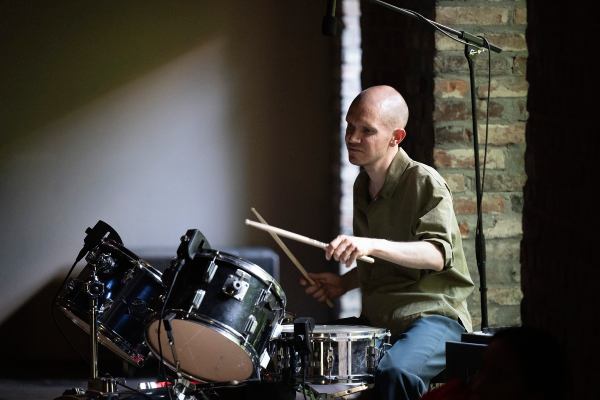
Photos: Dieter Hartwig, all rights reserved
Film: Andrea Keiz, all rights reserved
.
Three questions to Isabelle Schad about Studies on Infinity #4 (Drumming & Rescue Score)
Premiered: June 26, June 27, /b>
Tanzhalle Wiesenburg, Sommerfest.ival 2026
Elena Basteri: Studies on Infinity has evolved into an ongoing exploration of movement over the past four years. How has your understanding of the concept of infinity changed throughout the process?
Isabelle Schad: Actually my ideas around the notion of infinity haven’t changed that much.
Studies on Infinity serves as a concept for looping materials in variations, potentially as long as our energies last – as long as we can stay present and as long as the overall schedule within our Sommerfest.ival permits. The idea is to dive into the choreographic materials, into our movement and sound principles, and mould them by repeating them. Looping our sketches deepens our understanding of them. Materials become materialities, and we lose the notion of linear time.
Infinity can thus relate to time – timeless experiences – but to space as well. The spatial tensions that create infinite prolongations of one into another are important in as much as they organise our space and our spacing. We look at each other as if mirroring ourselves in one another, which creates an infinite feedback, and this is also relevant as a relationship to the spectator, who becomes another mirror. As if the whole world were a mirror of our selves …
EB: Music plays a central role in this new iteration, with a live performance by the musician and composer Anders Vestergaard. How did this collaboration come about, and how do music and movement shape and influence one another within the work?
IS: Chris Pitsiokos organised an experimental music festival at our place Tanzhalle Wiesenburg – the Hard Listening Festival. I went by several times during the festival, and I was blown away by the quality of the different events and concerts. Anders Vestergaard played a solo drumming concert which was a real shock for me. It was musically so intense and so joyful, and it was a brilliant movement performance at the same time. Seeing him play was like seeing dance, dance in trance, qi gong or aikido to me. I instantly visualised movement, and dreamt of working with him and this music. The first idea that came to my mind was the power of music, the power of dance, the power of being fully present where we are and through our respective artistic means.
The live performances during the festival with Chris on alto saxophone were equally fascinating to me, by the way. After speaking with one another, different openings and wishes for collaboration popped up. With Anders the power of percussion, rhythm and layers of live-triggered resonances are at the centre our new research. The spatial tensions and the power of the sound crossing the space and hitting the walls, the sound-waves riding across, affects us a lot, and it affects us differently in different places in the space. The aikido practice that I’ve been involved with for many years teaches us to send out energy and a fluid soft force that can’t be achieved through muscular strength. It’s another strength, that of permeability. And it’s the one that sends out forces and energy as a soft yet powerful strength. Anders does the same with his instrument and in his way of playing it. So I have the feeling we can amplify one another, sound and music, movement and dance, and have a third thing generated by playing with one another.
We’ve started a collaboration with Chris too – an alto sax and dance duo on the concept of Hands Dances, which is a format I invented two years ago as an answer to the cultural funding situation with all the cuts, frustrations and diminishing hopes. The concept is orientated to the freedom of a musician, who takes his instrument to play for people, and lots of communication happens. Why don’t we do something like that in dance? Why don’t we dance more? I thought we needed to free ourselves from production burdens and act much more like musicians … and take our physicality as an instrument further, in a humble way, and let our hands speak and dance like those of a musician. We’re showing some results of this research here in the festival too.
EB: In the performance text you speak about creating spaces for resilience, hope and collective experience at a time of social and global crisis. What role can dance play today in cultivating these qualities and responding to the challenges of our time?
IS: We’re living in extremely brutal times of capitalism and individualism. And the crises are on all levels – there are the wars, of course, but we’re also experiencing dangerous right wing movements, populism, constant polarisation in communication, extremely cruel migration politics that don’t respect human rights. People are brought towards fear and compelled to act out of fear. It’s really frightening.
We need to do everything we can to live our lives with respect for one another, with a peaceful and loving mind and with a deep acceptance for one another and our differences. Respect and acknowledgement are the basis for any democratic way of being with one another rather than against one another – the one and the other, the foreigner as a frightening other, which is just the metaphor for war. In our daily practice, which is strongly influenced by aikido, I feel the emphasis is less on the movement itself, or on any notion of perfection, than on the quality of attention devoted to what we are doing. The attention guides the hands, the movement and the action we’re carrying out. This alertness – this attentiveness – also includes bowing and respect for the other. It naturally brings with it mindfulness, a sense of safety and compassion.
Presence in the moment also gives rise to an awareness of impermanence, because you recognise that movement and transformation are always taking place already. This in turn evokes a certain reverence for life. You realise you’re part of larger movements and interconnections rather than standing above them. Serving is an art in itself. We can serve someone, a community or a bigger whole, It’s an art in itself, and this is so different from just taking and consuming.
I would even argue that the alertness and attentiveness I’m talking about also contain the capacity to serve. Perhaps it’s worth reflecting more deeply on the notion of service: serving oneself, serving others, and serving the community as something of great value – as an art. As a unique mode of experience and as an honour bestowed on us during our lives as human beings, as creatures whose very nature is rooted in community.
I think group work – and in this context we’re a small group, though we can also be many – is a proposal for a WE with our differences and uniqueness, our singularity and the energy each of us brings. The two scores we use in this context reflect the power of expression through our respective media of dance and music. The drumming score is organised like a game of chess, and the rescue score deals with the notion of HELP: rescue and its transformative potential.